Wild Garlic
A flower from the old wood
| Common Name | Bear Leek, Bear’s garlic, Ramson among others |
| Gaelic Name | Creamh |
| Latin Name | Allium ursinum |
| Family | Amaryllidaceae |
| Season | Flowers from April to June |
| Conservation status | Common and widespread across the UK |
| Native or Non-native | Native |
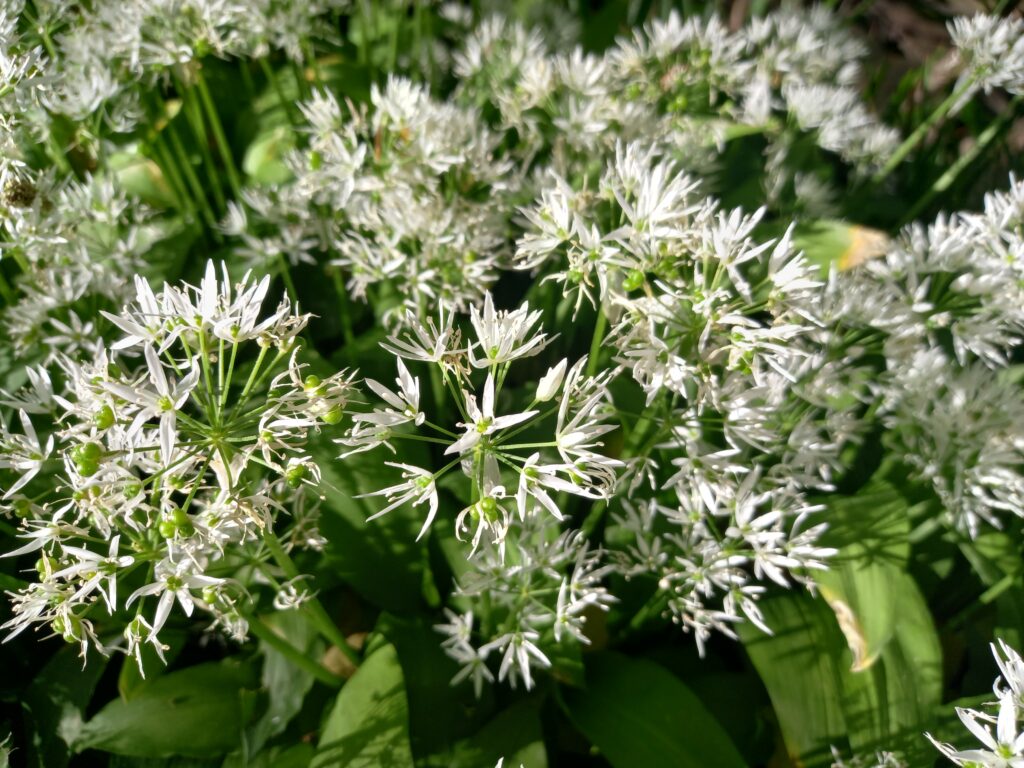
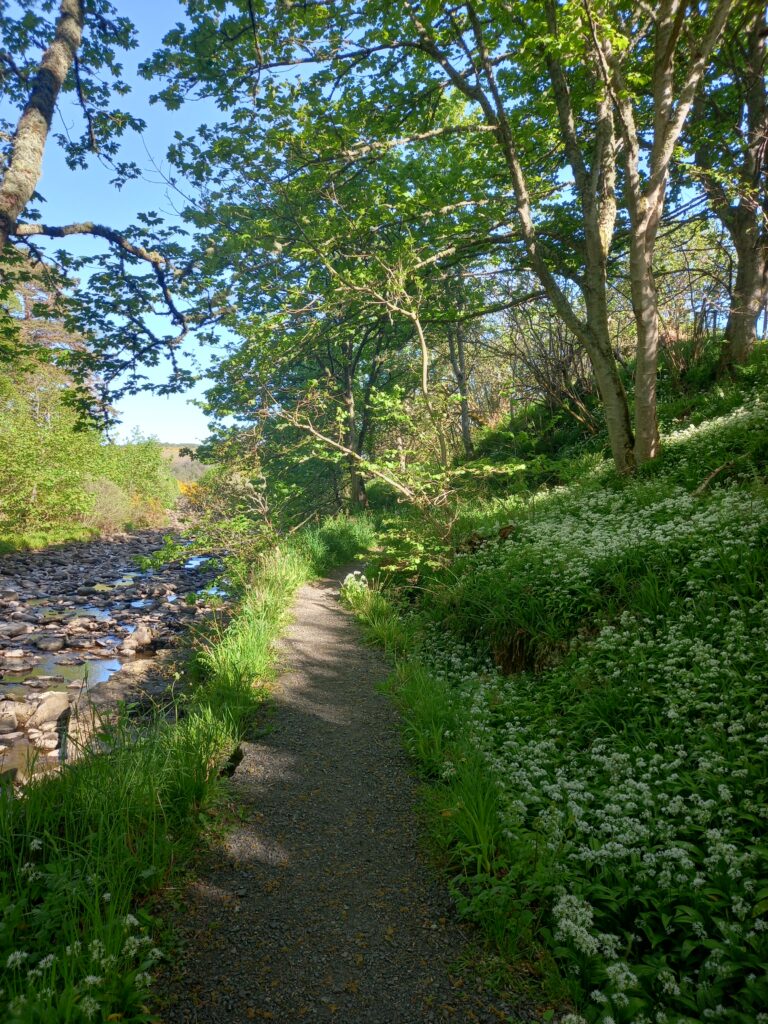
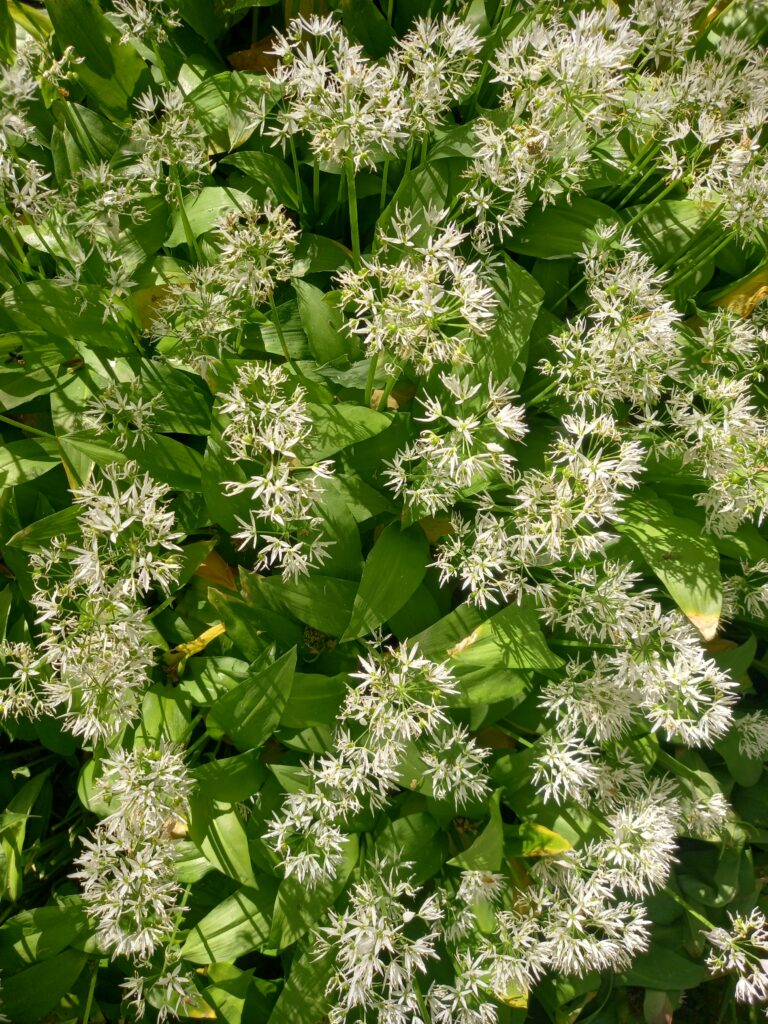
In Spring, the path that winds along the river and up to the first gate is lined with dense, delicate white flowers. But the pungent, familiar scent will hit you before you see them. A member of the onion family, wild garlic (Allium ursinum) is a perennial, carpeting the floor of moist, shaded woodland every year.
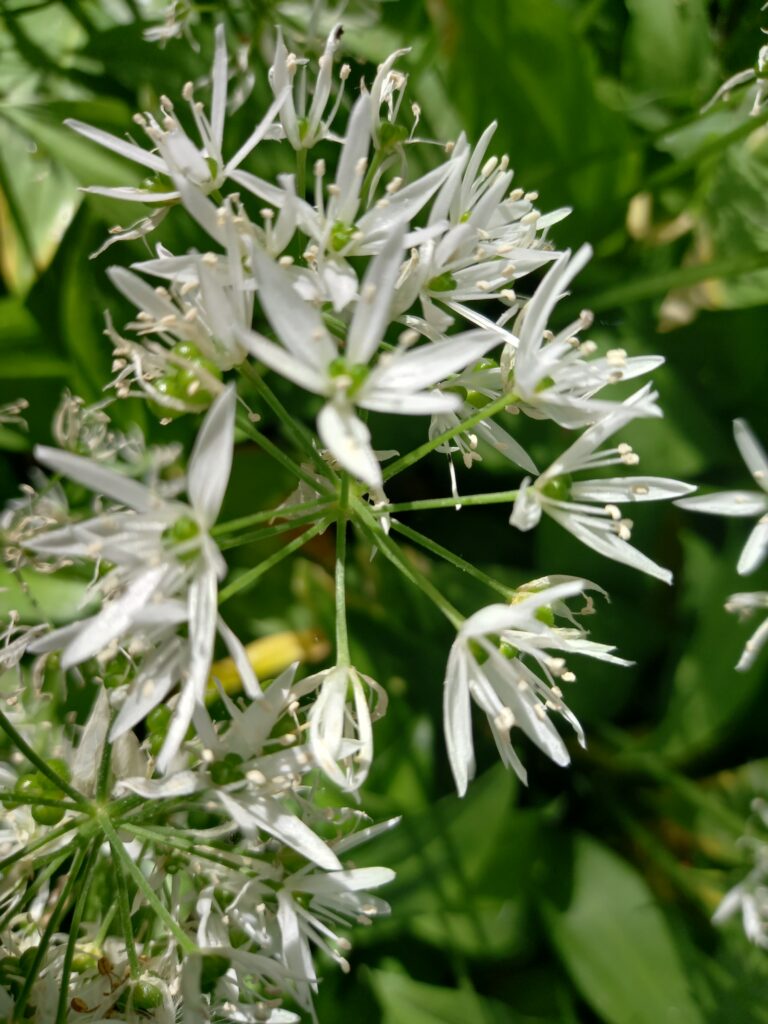
It grows as a bulb underground, only emerging at the turn of the season. The bright green pointed leaves and star-shaped flowers are both edible and a favourite of foragers. May is the best time to see it here, and it disappears by early June, the scent lingering as the flowers die back.
A diet staple of the Celts, wild garlic has long been prized as a folk remedy – used for everything from purifying the blood to aiding digestion. John Cameron’s Gaelic Names of Plants (1883) captures its cure-all reputation well: “Garlic and May butter are remedies for every illness.”
Its Gaelic name Creamha has left its mark on the Scottish landscape, preserved in place names such as Bad a’ Chreamha (“Tuft of Wild Garlic”) and Creag Creamha (“Crag of Wild Garlic”).
Where to find it
It favours deciduous woodland, hedgerows, or along riverbanks, and thrives in dappled shade in moist, cool conditions.
Why it’s important
Wild garlic is an indicator species of ancient woodland, and Dunbeath Strath is one of the few precious places in Caithness with areas that have been continuously wooded for hundreds of years. These woodlands are mostly native species that have grown naturally.
The wild garlic flowers are an important source of early food for bees and other insects that pollinate them.
Wild curiosities
The species name ursinum means “of the bear” and reflects the brown bear’s fondness for the bulbs, which is also where the common names bear’s garlic and bear leek come from. Sadly, there’s no risk of having to share your foragers basket with a bear in the strath these days. Brown bears used to roam free across Scotland but were hunted to extinction by around 450AD.