Common Dandelion
From the Lion’s mouth
| Common Names | Dandelion, Lion’s tooth, blowball, faceclock, piss-a-bed, cankerwort |
| Latin Name | Taraxacum officinale |
| Gaelic Name | Bearnan-Brìde |
| Family | Asteraceae |
| Season | Flowers from March to October |
| Conservation status | Common and widespread across the UK |
| Native or Non-native | Native |
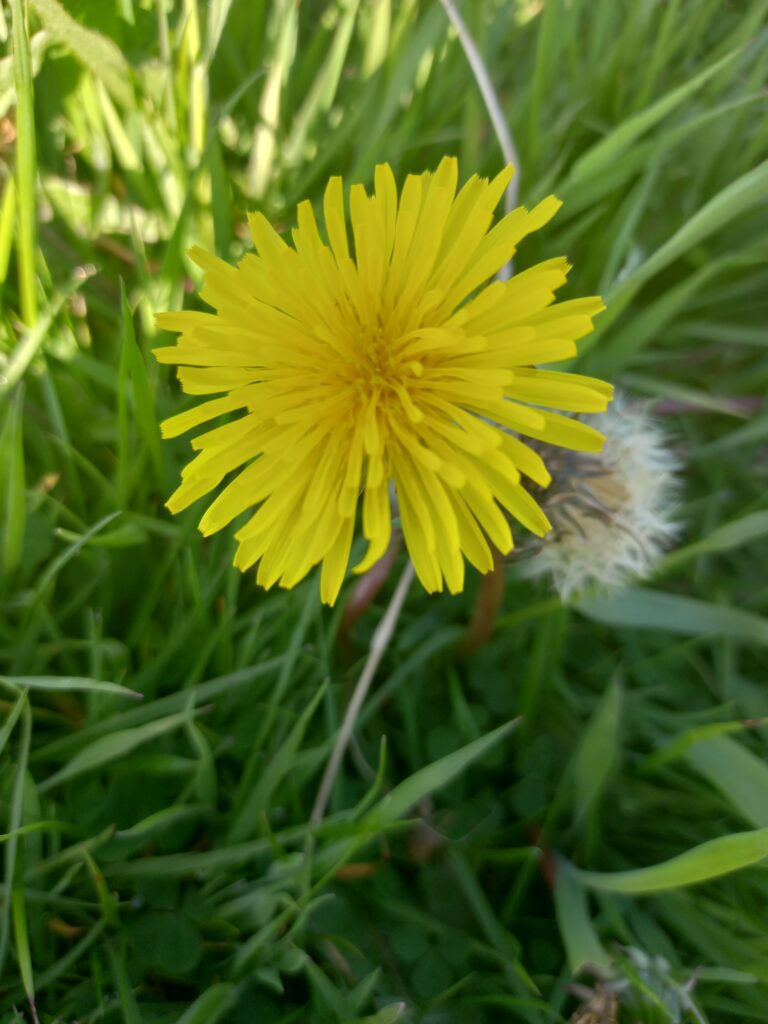
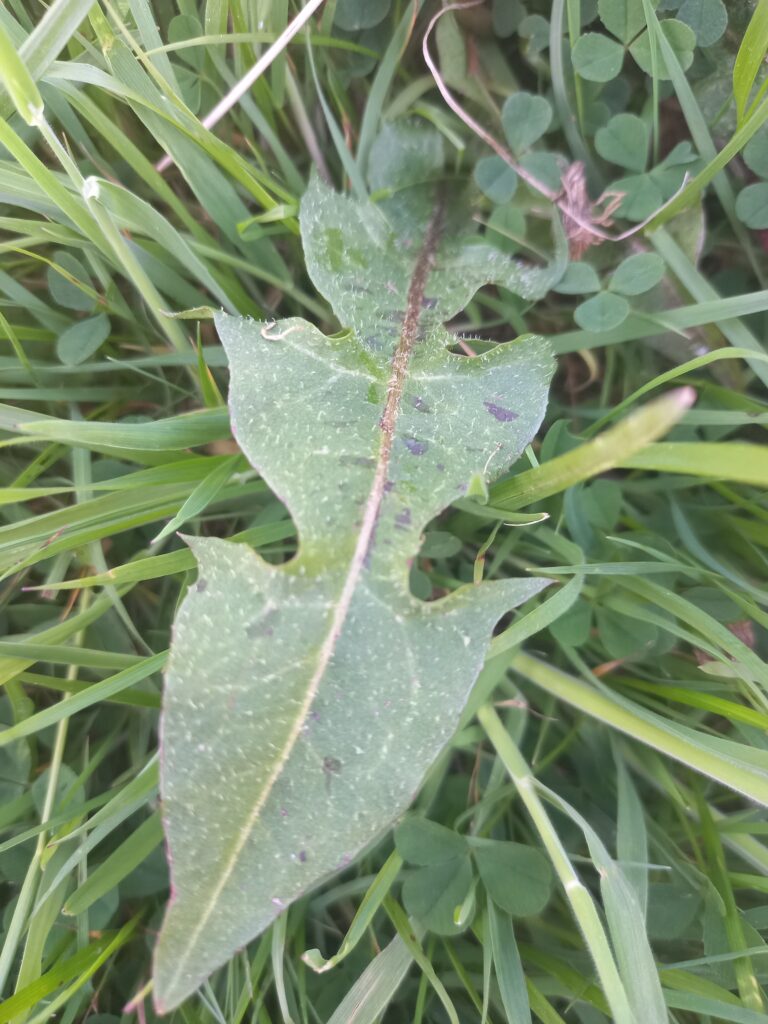
Dandelions are among the first flowers to appear in the Strath in early Spring along the path edges and open stretches of grassland, and they continue to give a cheerful pop of yellow throughout the year. They get their name from the French Dent de Lion which means lion’s tooth, pointing to the jagged edges of their leaves.
A forager’s delight, every part of the plant is edible. Among other uses, the root can be roasted as a coffee substitute, the leaves can be added to salads, and the flowers can be used in jam.
The flowers grow on a single stem which, when broken, seeps a sticky white sap – a defence mechanism triggered by damage from insects or other threats. They grow from a very deep taproot, as any gardener who has tried to dig one out will know.
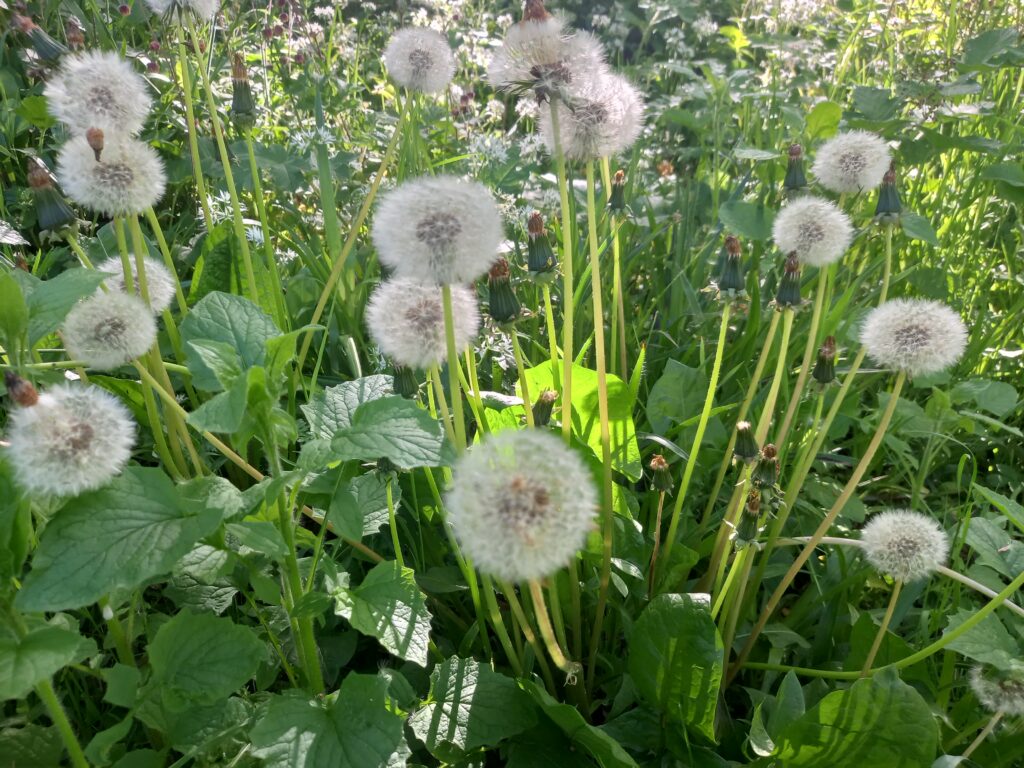
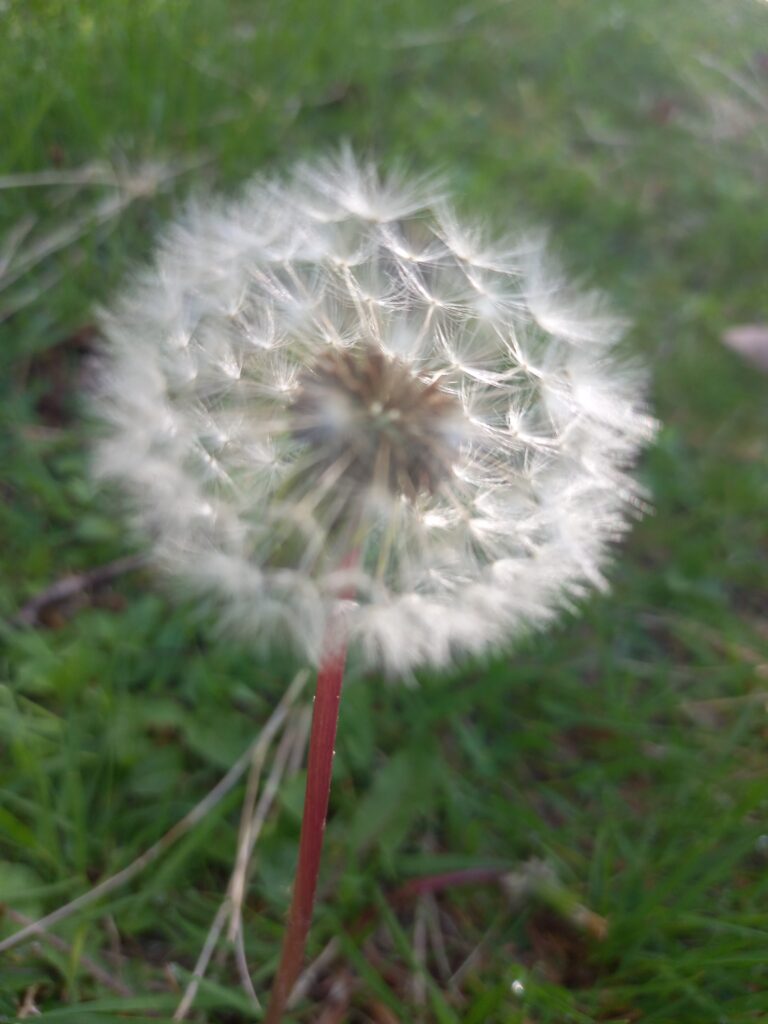
Each flower head is actually a composite of many tiny individual flowers called florets, which later transforms into the familiar puffball of seeds, each with its own parachute-like structure. In the right conditions, seeds can travel up to 100km on the wind.
Dandelions do not need to be pollinated to reproduce. Instead they can produce seeds asexually through a process called apomixis without pollen transfer or fertilisation.
Where to find it
Dandelions are incredibly adaptable and grow almost anywhere, from pavement cracks to waste ground but favour open grassland and woodland edges like those found throughout the Strath.
Why it’s important
Dandelions are a critical source of early food for bees, butterflies and moths in early Spring. They are one of the only plants in flower when bumblebee queens wake from hibernation.
Wild curiosities
The Gaelic name Bearnan-Brìde – meaning “the notched flower of St. Brigid” – roots the dandelion in the traditional festival of Là Fhèill Brìghde, also known as Imbolc, which is celebrated on the 1st February to mark the beginning of Spring and the returning of the light. It’s a fitting tribute for one of the season’s first flowers.
The English folk name piss-a-bed is rather less poetic – a reference to the strong diuretic effect after eating the leaves.