
Common Dor Beetle
The unsung heroes of the woodland floor
| Common Name | Dumble-Dor, Dumbledore, Lousy watchman |
| Gaelic Name | Daolag-dhubh (“black beetle”) |
| Latin Name | Geotrupes stercorarius |
| Family | Geotrupidae (Earth-boring Beetles) |
| Season | Active from April/May |
| Conservation status | Common and widespread across the UK |
| Native or Non-native | Native |
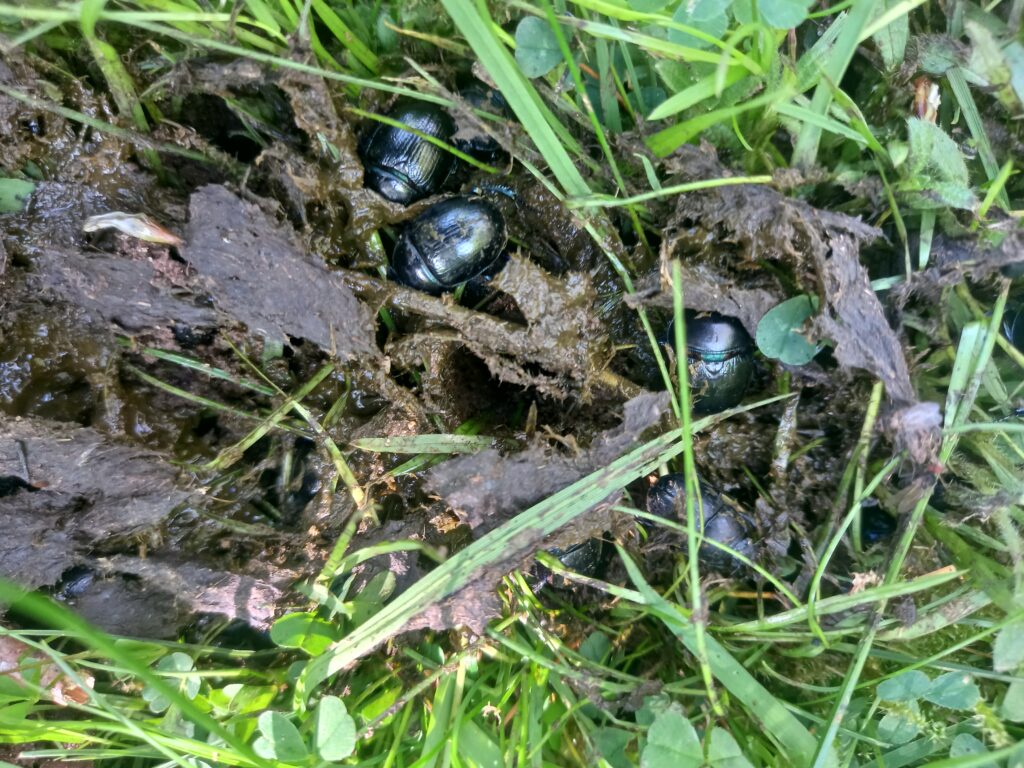
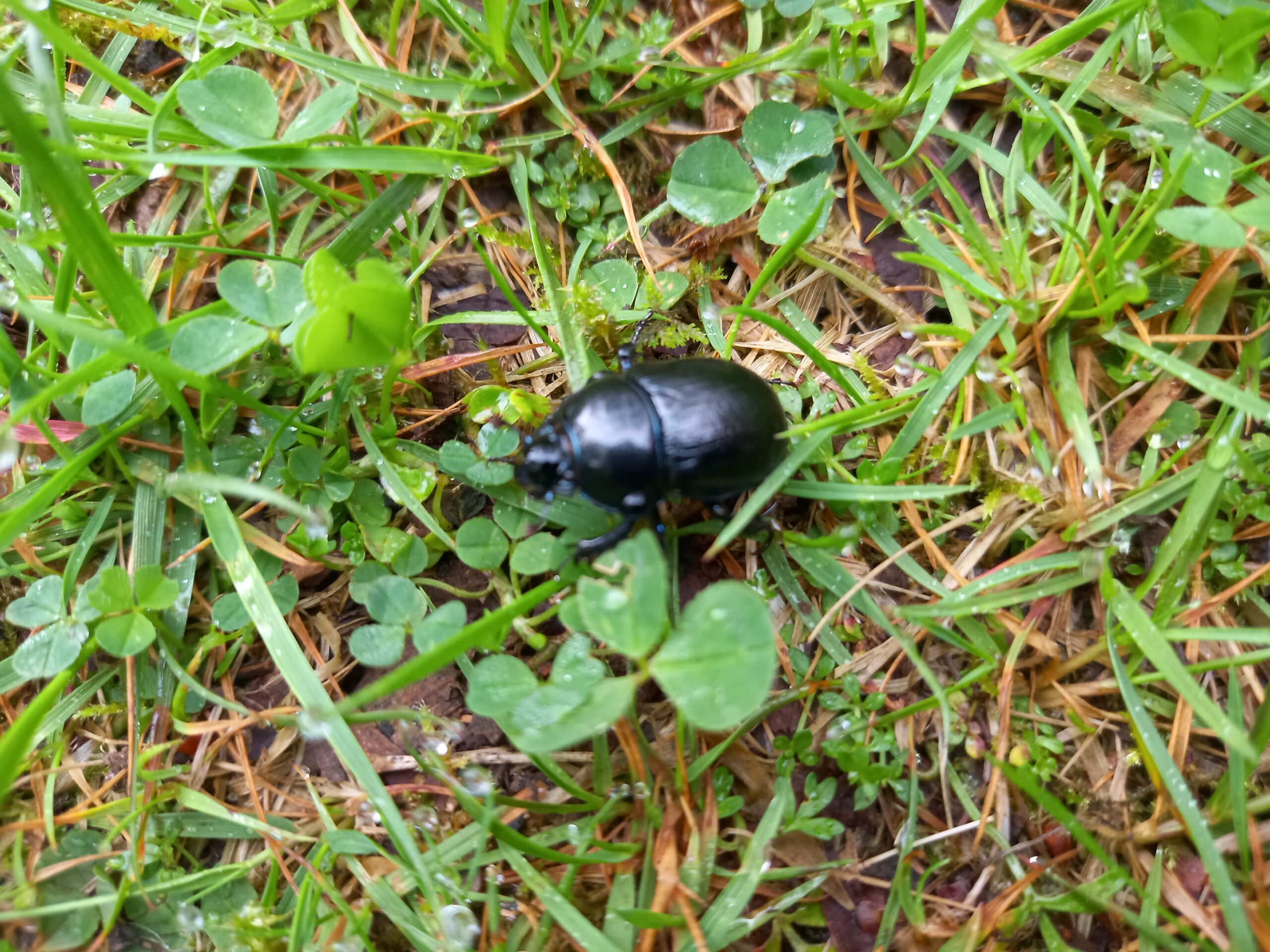
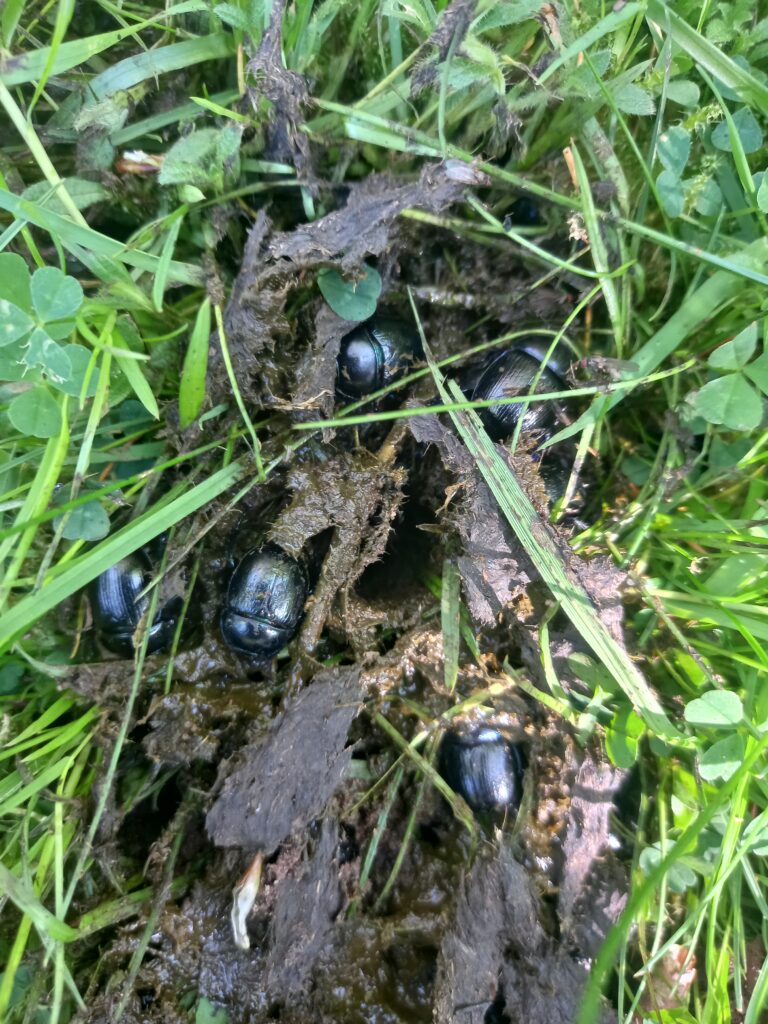
Follow the path through the second kissing gate and into the woodland in early May and, if the sheep have been down, you need to watch your step. Not so much for the dung itself, but for the myriad black beetles wandering around in search of it. These rounded, compact beetles look black at first glance but catch the light with an unmistakable oily metallic gleam. This is the Common Dor Beetle (Geotrupes stercorarius), one of the strath’s most industrious residents and, as with many of nature’s recyclers, one that is easy to overlook.
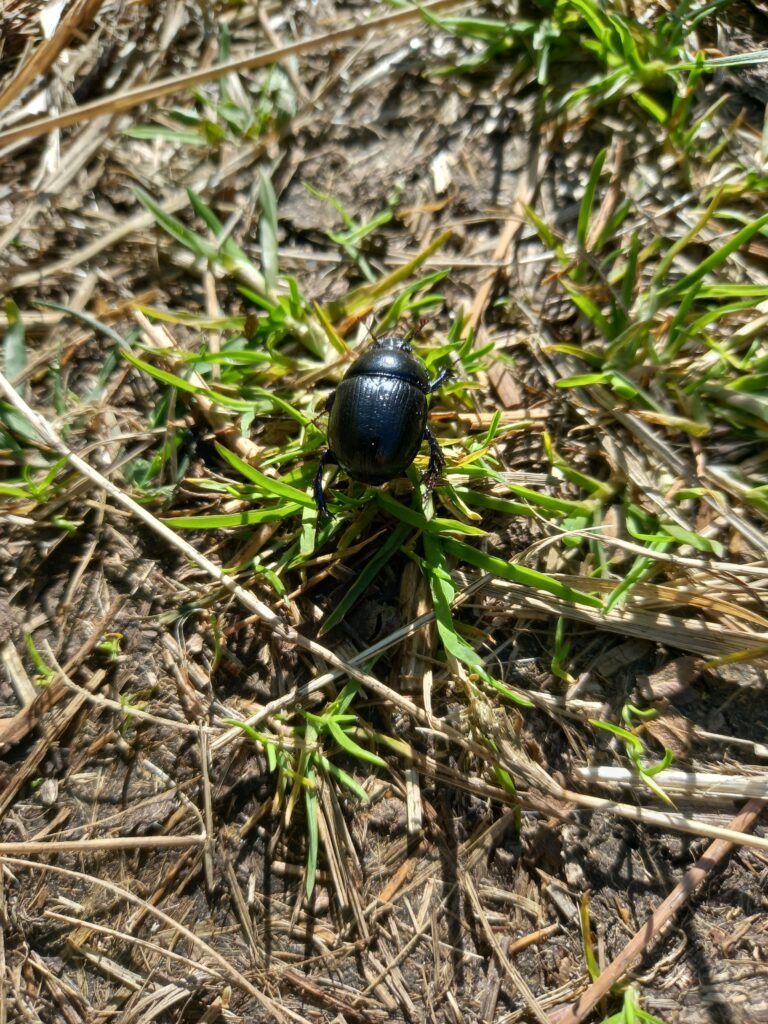
One of around 60 species of dung beetle in the UK, it is a striking insect up close. The upper surface has a hint of blue, while the margins of the wing cases and the pronotum – the shield-like plate between head and abdomen – often carry a brighter metallic edge. Find one on its back and the underside shimmers in violet and blue. The antennae are short and broaden into fan-like clubs at the tips – all this beauty is somewhat surprising given its unsavoury dietary habits.
Where to find it
Because the Dor Beetle feeds on the dung of grazing animals, the strath’s mix of open grassland, moorland edge and woodland, with resident sheep and cattle, makes it well-suited habitat. Mostly active at dusk and into the night, the beetles can sometimes be seen in low flight across grazed areas and may turn up in numbers around livestock.
Why it’s important
The beetles’ tunnelling habit quietly transforms the soil. By dragging organic matter deep below the surface and aerating the ground with their burrows, dung beetles improve soil structure in ways that benefit the whole ecosystem above them.
The benefits extend well beyond soil health. By breaking down dung rapidly – beetles can locate a fresh deposit within an hour – they actively reduce breeding habitat for nuisance flies and parasitic worms that would otherwise affect livestock.
The larvae and adult beetles are also a significant food source for hedgehogs, foxes, starlings, owls and bats, threading the beetle into the broader food web of the strath.
Sadly, exposure to anthelmintics, a type of drug given to livestock to control intestinal worms, is causing a worrying decline in dung beetle numbers across the UK.
Wild curiosities
The Dor Beetle makes a low droning sound with its wings, and combined with its lumbering, ungainly flight, this gave rise to one of its oldest and most charming nicknames: dumbledore. The word combines two old parts of British dialect – dumble, meaning to move slowly or clumsily, and dor, an old term for a buzzing flying insect. The beetle can also produce sound by rubbing its abdomen against its legs or wing cases – a process called stridulation – thought to be a defensive response.
It is common to find a Dor Beetle struggling on its back. Their short, sturdy legs and heavy body can make righting themselves difficult, and their wavering, ungainly flight makes for many an awkward landing. Whether reaching the end of their natural life cycle or just upended by a bumpy touchdown, a bit of help with a nearby twig can see them on their way.
Look closely at one and you may notice small passengers on its underside – mites clinging to the beetle’s body in sometimes large numbers. Like bumblebees, Dor Beetles are regular mite taxis. The mites usually cause no harm – they are just hitching a lift to pastures new.
And finally, a note on strength. Pound for pound, dor beetles are among the strongest animals in the world – capable of moving objects many hundreds of times their own body weight.